

LGBTQIA+ spaces say ‘all are welcome’, but Asian men know better
From dating profiles that request "No Asians" to racist comments in night clubs, the gay community doesn't feel inclusive for many Asian American men.
From dating profiles that request "No Asians" to racist comments in night clubs, the gay community doesn't feel inclusive for many Asian American men.
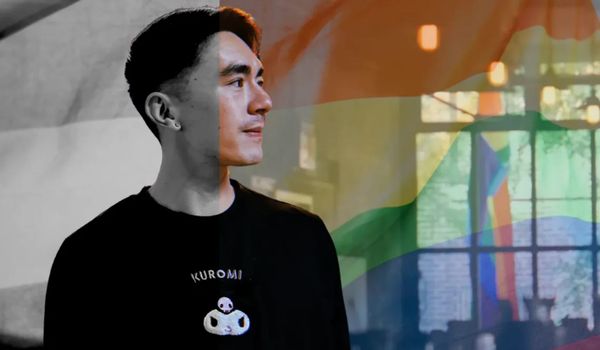
WORDS BY JAKE ANGELO, UNCLOSETED MEDIA
PHOTO COURTESY OF CODY SEIYA
DESIGN BY SAM DONNDELINGER
Cody Seiya did not feel welcome in Provincetown.
“Is that for yellow pride?” a man sneered at Seiya in the middle of Ptown’s tea dance, referring to a yellow bandanna he was wearing around his neck.
It wasn’t the first time Seiya, a 33-year-old gay Asian American, had experienced racism from other queer men. Years earlier at Rage, a now-closed gay club in West Hollywood, another white man asked him what he was doing there.
“It’s not Gameboi night,” the man said to him, referring to the Asian-themed weekly party the venue hosted.
“That was really the first time that I really felt some sort of divide,” Seiya told Uncloseted Media. “We’re already such a marginalized community, and then to just marginalize even further; it was just really disappointing.”
Seiya’s experience isn’t unique. A 2022 report from The Trevor Project found that more than half of Asian American and Pacific Islander (AAPI) LGBTQIA+ youth reported discrimination based on their race and/or ethnicity in 2021. And another study from the Williams Institute found that nearly one in five AAPI LGBTQIA+ adults do not feel safe in the U.S.
This discrimination is a silent epidemic, according to Gene Lim, a researcher at the Australian Research Center for Sex, Health and Society.
“There’s a lot of shame around experiencing sexual racism, on top of the fact that it’s an inherently distressing situation,” Lim told Uncloseted Media. “That congeals into a sense of isolation.”
Feelings of exclusion take a mental health toll: 40% of AAPI youth seriously considered suicide in the U.S. in 2021, and 16% attempted it.
Seiya says he’s carried those instances of racism with him and that they’ve impacted his self-perception in queer spaces.

£12.99 Monthly
£57.99 Annually
Cancel anytime
No results found. Try a different search.