
US Supreme Court leans toward upholding state bans on transgender athletes
The Supreme Court has heard oral arguments for two high-profile cases challenging bans on trans athletes
The Supreme Court has heard oral arguments for two high-profile cases challenging bans on trans athletes
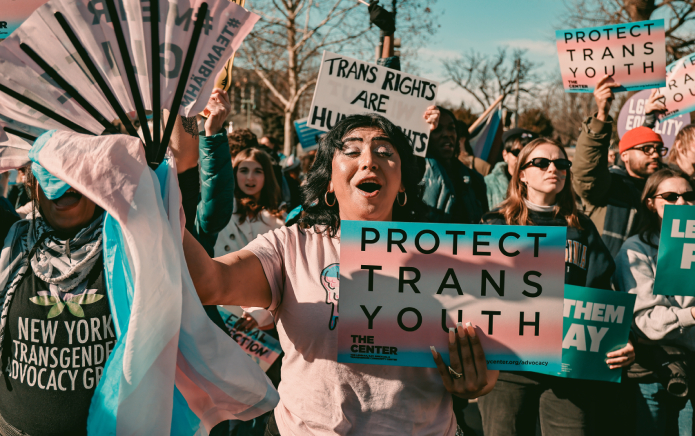
The US Supreme Court has seemingly leaned in favour of West Virginia and Idaho laws banning trans athletes from sports.
On 13 January, the Court heard oral arguments in two high-profile cases — West Virginia v BPJ and Little v Hecox — challenging legislation that bans trans youth from competing in interscholastic and intercollegiate sports.
Lambda Legal, Legal Voice, and the ACLU filed two challenges on behalf of two trans female athletes, Lindsay Hecox and Becky Pepper-Jackson (B.P.J.).
While attending Boise State University in 2020, Hecox — who is now 24 years old — attempted to try out for the school’s women’s track and cross-country teams, but was barred from doing so under Idaho’s Fairness in Women’s Sports Act.
B.P.J., who has identified as a girl since she was in third grade and has taken puberty blockers to avoid male puberty, as well as hormone therapy with estrogen, faced a similar roadblock in West Virginia under the state’s Save Women’s Sports Act.
As a result of the girls’ respective lawsuits, federal courts have blocked the enforcement of the two aforementioned bans.
During the nearly three-and-a-half-hour oral arguments, the pair’s legal representatives — Kathleen Hartnett and Joshua Block — argued that the two laws violate the rights of both trans and cisgender female students under the Equal Protection Clause of the Fourteenth Amendment.