

Has gay RPF gone too far?
Tom George on the rise of RPF (Real Person Fiction) and its real-world consequences.
Tom George on the rise of RPF (Real Person Fiction) and its real-world consequences.
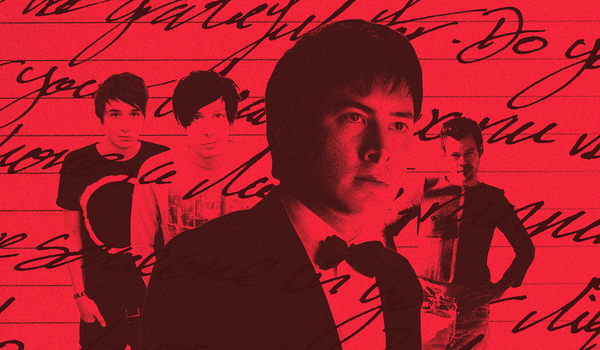
Design by Yosef Phelan
You probably don’t know it, but since the Met Gala there has been a subsection of the queer internet that has been in meltdown: a fandom known as Hudcon. It’s nothing to do with Hudson Williams and Connor Storrie (aka Hudcon) outfits at the star-studded event. It also has nothing to do with the horny, breakout TV show they were both in either. On Threads, Hudson responded to a fan’s post that implied his real life relationship with girlfriend Katelyn Rose Larson was inferior to a fan-imagined one with co-star Connor. “RPFing gotta stop y’all,” he posted on the app, perhaps one of the few people in the universe still checking Meta’s X dupe.
RPF, for those not terminally online, stands for Real Person Fiction, a form of fan-created content where celebrities and real life figures are the protagonists. It is often homoerotic in nature, though not exclusively, and arguably its history is a lot more respectable than the genre is given credit for. “Dante’s Inferno, where he illustrates his rivals and enemies burning in hell, is a form of Real Person Fiction,” says Yvonne Gonzales, a doctoral student at the University of South Carolina studying fan media. She also points to Shakespeare’s history plays as examples of RPF. The same can be said of Joyce Carol Oates’ Blonde. Around the 70s’, RPF began to merge with slashfic, a genre of fan fiction that was more sexual or romantic in nature, largely formed out of the Star Trek fandom and their shipping of Captain James Kirk and his bestie Spock. Sometimes also called M/M, yaoi or BL depending on the culture, the genre found ground amongst the music scene when Led Zeppelin began to be the protagonists of queer romances based around their music, typewritten by fans. The band played into it, publishing these works with pseudonym names instead of theirs in special fan zines. This culture expanded across the pop-punk bands of the 80s to 00s, but became momentous with Larry Stylinson, a fictitious One Direction coupling that happened to coincide with the birth of social media and fanfiction websites such as Archive Of Our Own and Nifty. With the rise of K-pop boybands, RPF went global but it is through Heated Rivalry, or rather the love for its stars, that the term has entered the public lexicon again.



£12.99 Monthly
£57.99 Annually
Cancel anytime
No results found. Try a different search.