Everything you need to know before opening your queer relationship
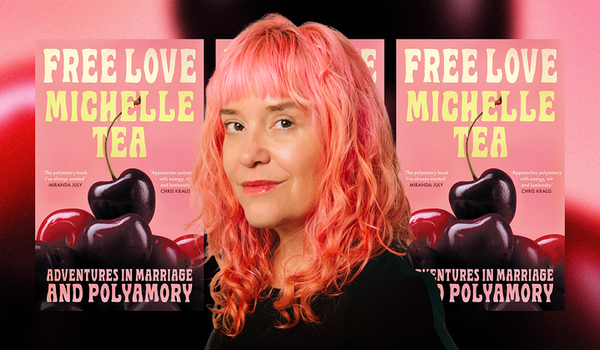
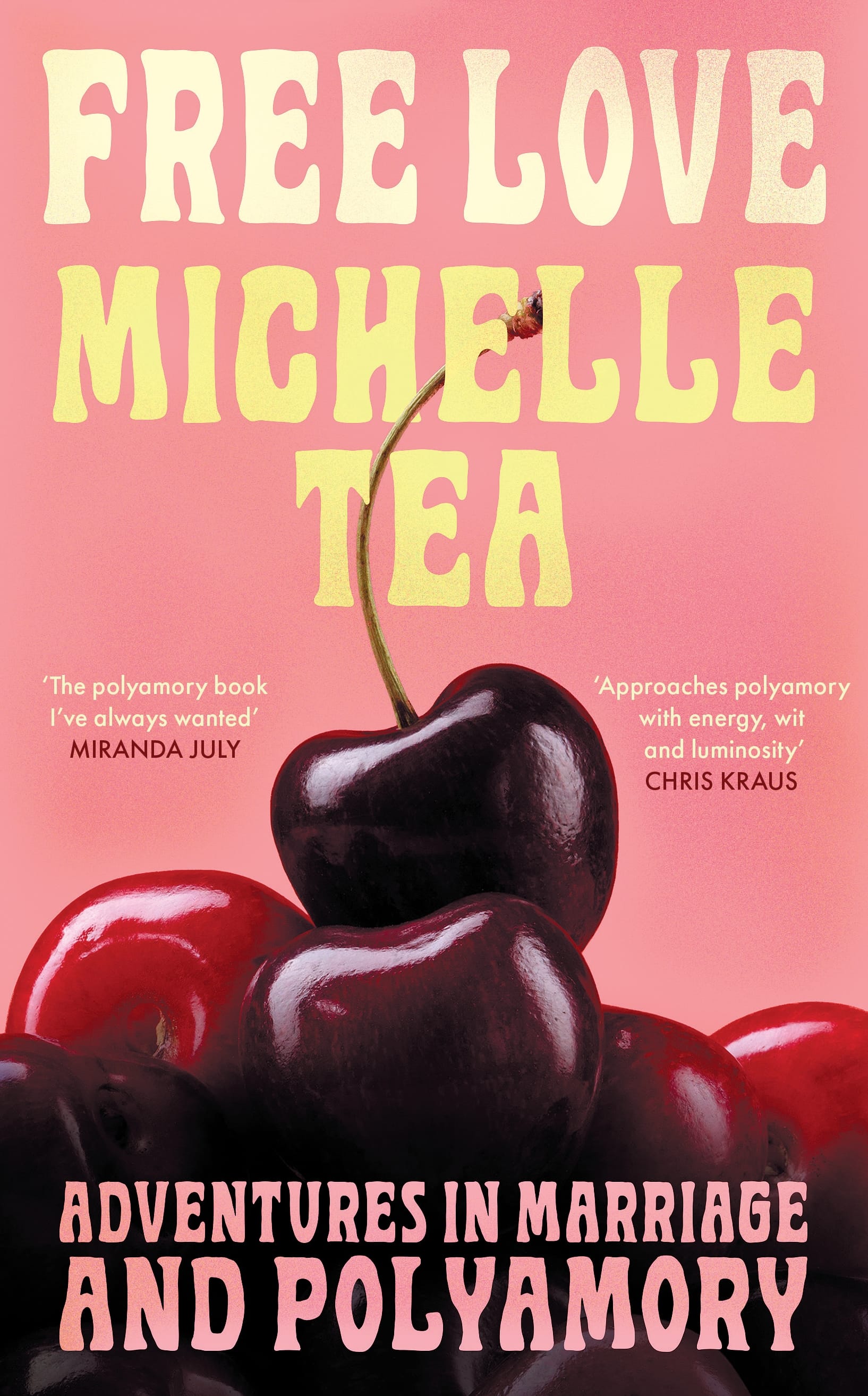
Michelle Tea's new book Free Love: Adventures in Marriage and Polyamory is about to blow open everything you thought you knew about ethical non-monogamy. Here, she shares her advice, whether you're knee deep in a Covid-conscious polycule or tentatively opening the door to a decade long marriage
Gay Times: Queer people have been f**king around with the rules of relationships for a long time. Why do you think polyamory has suddenly become everyone’s favorite dinner-party conversation?
Michelle Tea: Monogamy does not work for everybody. And unchecked, uninvestigated, compulsory monogamy doesn’t really work for anybody, I don’t think; to just be popped into these relationship models without even understanding that there are alternatives.
We’re living in a time, probably because of the internet, when we’re all so interconnected that different ways of living are more accessible to us. We have that information now in a way my generation didn’t in our early adulthood. When I was about 18, I stumbled onto a book in the library called Open Marriage. I was so curious. I read it and thought, “This is incredible.” I stole it from the library, like the bad person that I am. Now anybody can know that polyamory exists. There are areas of the world where it’s really normal to be polyamorous, and it’s always been somewhat normal in queer circles. You know how it goes with queer culture: eventually everybody’s doing what we’re doing.
Gay Times: A hundred percent. We know how to live.
Michelle: There’s too much unhappiness within monogamy for it not to be investigated during an era when there’s so much information available. Cultural mores are shifting and changing, and so much of that is because of queer people.
Gay Times: Do you think queer people are naturally better equipped for non-monogamy because we’ve already had to question society’s expectations about sex and relationships, and come out? Or are we just as capable of making a complete mess of it as everybody else?
I think to do non-monogamy or polyamory is to make a mess of your life, at least temporarily, because there’s a real learning curve.
Michelle: Oh, we do make a complete mess of it. Absolutely. I think to do non-monogamy or polyamory is to make a mess of your life, at least temporarily, because there’s a real learning curve. It was helpful for me to learn that just because I was having a panic attack or really struggling with something didn’t mean I wasn’t capable of being polyamorous, or that it wasn’t what I wanted. It’s a path that throws some shit at you, and you have to get good at it.
The rewards for getting good at polyamory go way beyond polyamory. We learn about regulating our nervous systems. We become better communicators. We’re better at boundaries. We become more in touch with ourselves. I think it’s awesome.
We learn about regulating our nervous systems. We become better communicators. We’re better at boundaries. We become more in touch with ourselves.
As far as queer people go, we’ve had to create maps for relationships in general. This varies from generation to generation; I’m speaking as someone who’s 55 - but there are still young people growing up in really conservative environments who have to create their own maps.
Being queer, you come of age having been told you’re bad and wrong, and you know you’re not. Ideally, eventually, you know you’re not. Then you start questioning: “What about all these other things I hear are bad and wrong?”
You can’t listen to the mainstream. It’s already proven to you that it’s unreliable and painfully biased. We’re people who have to try things out for ourselves.
Queer people can obviously be toxic. I know so many people who’ve been in toxic polyamorous situations. I have been as well. I don’t want to make it too rosy or romantic, because it’s not, but I do think there are benefits to being polyamorous.
I don’t think polyamory is inherently queer. It’s non-traditional. You can call it radical. There are other cool things you can call it.
Gay Times: Is polyamory inherently queer, even when the people practicing it are straight sexuality-wise? Or has mainstream poly culture lost some of its radical roots?
Michelle: I don’t think polyamory is inherently queer. It’s non-traditional. You can call it radical. There are other cool things you can call it. But queer, to me, means you’re a person who’s interested sexually and/or romantically in other queer people. If it’s a bunch of straight people being poly, I think it’s really cool that they’re doing that, sure. But it’s not queer.
Gay Times: If one partner leans towards monogamy and the other towards polyamory, can that imbalance work? What have you learned about making space for two people’s different desires?
Michelle: I think it absolutely can work, and it’s on a couple-by-couple basis, because everyone’s different. There are so many different ways to be open.
I’m a “give me an inch and I’ll take a mile” kind of person. I could start by saying, “I’ll just fool around when I’m traveling,” and then it’s: “No, I want to be equally in love with everybody” That’s something I learned by going through it.
People have different limits of what they’re comfortable with, and different amounts of willingness to face that discomfort and move through it. Some people might say, “I can see how it would be great for me to move through that. I see this other way I want to be, and I want to work towards it.” Other people might feel really lost and hurt and swirling with it.
People have different limits of what they’re comfortable with, and different amounts of willingness to face that discomfort and move through it.
Gay Times: What advice do you have for queer couples wanting to start this conversation? How do you open it up initially?
Michelle: Go into couples counseling with a counselor or therapist who is very well-versed in queerness and polyamorous relationships. That has been so helpful for me.
I was shocked at friends who were raw-dogging opening up their relationship.
I was shocked at friends who were raw-dogging opening up their relationship. I was like, “Damn, you guys.” You need an outside party, that wise observer who can see things you’re not able to see because you’re so flooded and dysregulated and triggered.
You might really want it, then find yourself so dysregulated and stressed out that you’re asking, “Why am I doing this?”
The first year of opening up a relationship is really hard. Part of the reason it’s hard is that it’s also so exhilarating. If you make a connection with someone - even a super-casual connection that’s all hot sex - you lose your mind.
The first year of opening up a relationship is really hard. Part of the reason it’s hard is that it’s also so exhilarating.
The pleasure and excitement of sex and romance is as disregulating as jealousy, or feeling like you’ve lost control or your footing. All these things are overwhelming.
New relationship energy is powerful, especially if you’ve been in a long-term monogamous relationship. Those chemicals haven’t flooded your body for a long time. They can blow your head off.
It’s good to keep your feet on the ground and know: “This connection might be important and profound to me, and it also might be incredible sex chemicals. I’m not going to know until some time passes and the chemicals settle down, or other things emerge alongside them.”
Not so much “go slow” - go at whatever your pace is - but know you’re going to be very disregulated. Any outside help you give yourself during that first year will only help you stay grounded and checked into reality.
Gay Times: What’s the difference between a healthy boundary and a rule that’s coming from a more controlling place?
Michelle: It’s kind of semantics, maybe. You could have a rule and say, “This is my boundary.” What’s important is that you can bring up a rule or boundary with your partner, and it’s good to know they might not agree with it.
Sometimes we feel: “This is my boundary.” It’s ironclad, golden, shimmering. It has the blessings of every therapist in the world upon it. We’re being so good and healthy, and it’s my boundary! Who breaks a boundary!? A bad person, especially if you’re queer.
It’s always a negotiation, even if you’re using language like “boundaries” or “rules.” You have to be open to pushback.
But your boundary might not work for another person, for what they’re feeling called to do and what’s important to them. It’s always a negotiation, even if you’re using language like “boundaries” or “rules.” You have to be open to pushback.
Then you get to figure out: “What do I do if this boundary isn’t respected? Is that a deal-breaker for me? How does it feel if I have to let go of this or modify it?”
Everything’s really alive. It’s hard to go forward with that ironclad, “that’s my boundary.” If those boundaries put limitations or control on another person, they might want to speak to that. Maybe they’re okay with it, and maybe they’re not.
We start throwing up boundaries and rules when we’re scared and feel we need to protect ourselves. When that’s going on, take some time for yourself. Calm your nervous system. Do some breathing.
Once I was so disregulated by an old partner and what was going on between us around polyamory. My child was a preschooler, so I was hearing a lot about regulation. I searched online for ‘yoga to regulate when you’re dysregulated’. It was for kids, but it was so helpful. I absolutely needed this woman to talk to me like I was five years old and flipping out. It was so soothing.
Those parts of ourselves that get triggered and scared and controlling are - not to cheese everyone out by saying “inner child” - but it’s true, these young parts of us that are scared… It’s helpful to baby them.
Never be mad at yourself for wanting boundaries or rules. Don’t be mad at yourself for wanting to be controlling. You want to be controlling because things feel out of control, and that feels scary and threatening.
But we can handle and calmly walk through a lot more than we think we can. We have to give ourselves that opportunity. We don’t give ourselves the chance to rise to our highest selves if we’re fearfully flinging out rules.
If someone says, “I don’t want you to go to that restaurant with a date because we had that special night there,” it’s like: yes, we did, and we’ll always have that special night. That’s our energy we brought to that restaurant. I can eat there with a hundred people, and it’s not going to be the same.
The energy between me and my relationship - that’s the magic. It’s us together. It’s about believing we have what nobody else has, and what we have is meaningful. Keep it meaningful. Don’t let it be subsumed by the stresses of opening up.
Gay Times: Which takes work, right?
Michelle: It does, and a lot of it is an inside job. I’ve been on both sides of this: you see your partner doing fun dates with a new person, and you’re like, “I want to do that with you. When are we having our date?”
Then the initial couple’s dates become this weird something-to-prove, payback, everything-has-to-be-equal thing. It’s stressful, and that’s not a fun date.
Try to take a breath. Don’t compete with the other relationships or be tit-for-tat about it. Things have their seasons.
It’s about being honest. You might not be in a place of new relationship energy with your long-term partner. That’s hard to sustain. Sometimes, when things are good between the initial partners, that new relationship energy can trickle in, if everyone’s comfortable with it. That can be fun and enlivening.
From hot-takes to hard-hitting journalism, our long-reads put you at the centre of queer life and culture. The best LGBTQ writing, insight and opinion, curated for you.
Support our work by subscribing today and enjoy must-read stories by the voices you love.