Living an unabashedly queer life can afford us fun and freedom, but leaves many of us feeling untethered as we approach middle-age. JJ Croucher investigates the gay midlife slump and why "choose wisely" should be less of a warning and more of a mantra in times of crisis.
As Carl Jung put it, the middle-age is the point at which "thoroughly unprepared, we take the step into the afternoon of life". It's a moment in which everything changes – as Jung warns us, the activities that might serve us in the morning will not survive the evening: in short, nobody wants a bowl of cereal for dinner.
Transitional life moments can cause us to spin out at different life stages, not just middle age. Once, as a strung-out PhD student in my mid twenties, I’d sat at the dining table with my mum; it was early in the morning and the waterworks had already started – I was in the midst of a quarter-life meltdown and seemed to have no idea who I was or where I was going.
My protracted chapter of schooling was about to close and then that was it – into the void, the rest of my life. I knew that the hedonic yo-yo that was my week would have to end; the highs: the club night I hosted, the red-wine laden, black-tie events; the lows: me and my flatmate’s forbidden love affair, my grown-out buzzcut, and the spontaneous processing of the teenaged trauma I’d naively believed was compartmentalised. But the type of future I equated with happiness seemed completely out of reach.
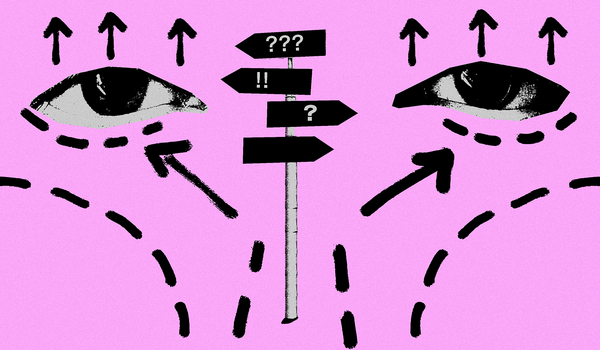
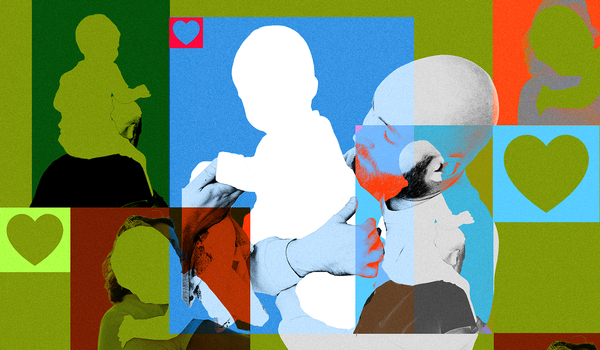
My salvation was a well-heeled husband, a glittering career, a double pram filled with a pair of cherubic surrogate twins – things I didn’t actually want, but that were symbols of an imagined future I had somehow internalised as a ‘good gay life’. I’d become supremely conventional; I’d be lobotomised into loving my homonormative existence. Through this psychological ascension – or self-annihilation – I’d never need to ask “What if?” and “What next?”. If this were to be the afternoon of my life, I’d have to somehow escape its very boozy morning — the path between A and B seemed to have no signposts.
My mum didn’t seem to understand my philosophical conundrum, asking me what I was afraid of. Though I was only in my mid-twenties, and had a good decades until midlife, I was reckoning with the fact that the party would have to end at some point. It was this prospect that haunted me; I didn’t want to be the last one left on the dancefloor, my peers retreating to cozy beds, to sleeping partners, to houses fuller than mine. Unable to articulate this, my answer was melodramatic:
Though I was only in my mid-twenties, and had a good decades until midlife, I was reckoning with the fact that the party would have to end at some point.
“I don’t want to be one of those men that gets to fifty and kills themself,” I said, between sobs.
She looked at me perplexed and said, “Why would you do that?” and I had no real answer – it just seemed like something a gay man might do.
From hot-takes to hard-hitting journalism, our long-reads put you at the centre of queer life and culture. The best LGBTQ writing, insight and opinion, curated for you.
Support our work by subscribing today and enjoy must-read stories by the voices you love.