Rebecca Black is ‘moving the pop needle forward’ with her debut album
With her long-awaited debut album Let Her Burn, Rebecca Black is owning her narrative and in the process, pushing boundaries in pop music.
With her long-awaited debut album Let Her Burn, Rebecca Black is owning her narrative and in the process, pushing boundaries in pop music.
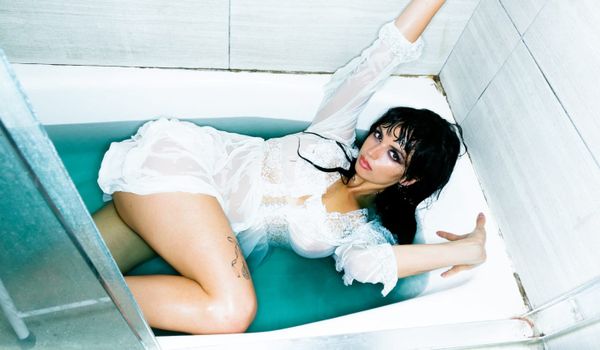
PHOTOGRAPHY BY SARAH PARDINI
Following the release of her lauded EP, Rebecca Black Was Here, the singer-songwriter and inventor of Friday – the day of the week between Thursday and Saturday – is continuing to ‘move the needle forward’ in pop with her genius debut album Let Her Burn. With her career-defining new era, Rebecca firmly cements her status as one of hyperpop’s most formidable stars with a collection of futuristic bangers that ‘challenges, comments and expands’ on pop music’s history.
“We live in a time where we have so many resources for sounds and to take risks,” Rebecca tells GAY TIMES during her UK tour of Let Her Burn. “As a pop artist, if you’re not doing that, you’re totally fumbling the bag because right now, people are so connected to uniqueness and looking for something that stands out and connects with their own unique brand.”
Here, we chat with Rebecca about the darker – and more sensual – direction for her long-awaited debut album, how hyperpop has impacted her artistry, as well as her decision to publicly come out, and why, 12 years after the release of her viral hit Friday, she no longer cares about “how people perceive me”.
When I got my start, it was by no means planned. When Friday happened, it was so unexpected and I was literally 13-years-old. I had so much to get through before I even… I mean, at the time there were talks from managers and business people like, ‘You have to capitalise on this and immediately come out with your album, here’s the plan.’ I was like, ‘I need to grow up! I need to decide if I want to do this.’ I needed a lot of – not ‘soul searching’ because that makes it sound like I was a 40-year-old who was going through some crisis – but I needed to grow up. I spent the time since then, particularly the time since I’ve been an adult, learning how to write and what I wanted to say. That was important to me because I wanted to make something that was meaningful and something I would be really proud of.
Yeah, literally. Totally. It’s really crazy because when you put something out, obviously it has your name and face on it and people see it as you, right? Even if you’re a kid. People don’t really understand the same power dynamics that exist in families and schools exist as a kid in the industry. It’s disheartening. To see people criticise the child, when they’re just at the mercy of being a kid and being told they’re not smart enough to make their own decisions, they don’t know what they’re talking about. They have no say in what’s going on.
Honestly, the music came before everything else. I had no album name. I had no cover art. I had no visual ideas until the album was done. That was stressful because I kept asking myself, ‘What is it? What do I want to do? What’s going on?’ Visuals are so important to me and the story is so important to me, so I sat there after the album was done, in every aeroplane and car ride I was in, thinking, ‘What is it?’ Once I had Let Her Burn as a title, everything made sense. I wanted it to live in a physical space; this burning house that I could live inside and outside of, being the one burning it down, that’s what made everything kind of fall into place. We shot the album cover and I worked with this designer, Cole Poska, who also did a lot of stuff for Rebecca Black Was Here, and it was an evolved moment for us both to be like, ‘What can we do? How do we make this feel so new?’ because it is like a continuation of my last project.
£12.99 Monthly
£57.99 Annually
Cancel anytime
No results found. Try a different search.