“I returned to India as my true self – the people I called family made me fear for my life”
Returning to India with a new name and a sense of freedom, queer activist Rain faced transphobia, threats and rejection. As trans rights come under attack, they share their fight to live authentically and refuse to be erased
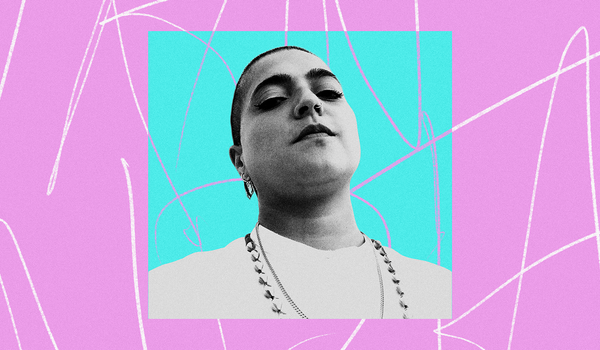
Trans activist Rain Reeta Loi. Artwork by Yosef Phelan
Words by Rain Reeta Loi Design by Yosef Phelan
It was raining when I touched down in Kochi International Airport in Kerala, India. I hadn’t been to India during monsoon season since I was four-years-old when I had visited my grandparents for the first time, in Punjab. Their hope for a better life for me was reflected in their eyes, bright with joy and relief that their bloodline was now in England, somewhere free of caste oppression, where I could be educated and walk a path they could only dream of. I got into a cab and the driver laughed with a similar joy and relief that it was raining: “Rain is late this year, we have been praying for it to come after so long and it is finally here, just this minute." I smiled as I reflected on the symbolism of his words, as I returned to India after four years with my new name, Rain.
I gazed out of the window and watched the familiar sight of women in saris, sitting side-saddle on the back of mopeds with their beautiful, tiny, doe-eyed children on their laps as we crossed the bridge to my home for the coming months. I’ve stayed in Kerala many times over the years, a home with a chosen family who were my base and safety when I travelled alone, before decriminalisation of homosexuality. They were cis-het Indian friends who had made me feel welcomed and supported. I was excited to see them again after so long and we had spoken many times about reuniting after the pandemic had kept us apart.
Before this I’d spent years campaigning, marching, writing, speaking, fighting for change and when decriminalisation of homosexuality was passed in 2018, I had put on a celebration in London for us to savour India finally becoming free of colonial legislation that had caused immeasurable suffering to queer people. Now I was back and it was 2023 and I was planning to spend some time writing my book.
The atmosphere was tense from the moment I arrived and over the coming days my new name and they-them pronouns were not respected by any of the 20 or so people I knew.
I had anticipated being met by my friends with the same joy the driver had met the rain pouring from the heavens and the way they always had in the past. But instead, the atmosphere was tense from the moment I arrived and over the coming days my new name and they-them pronouns were not respected by any of the 20 or so people I knew – people I had thought were my friends and some of whom I considered my chosen family. In fact, the atmosphere was hostile, aggressive and the resistance to using my new name and pronouns felt like a deliberate act. I had shared this information with them when I was in the UK and although they had not been hostile over text, they also had not been particularly supportive either. I had expected some work having to explain why I now identified as non-binary, which I had become somewhat accustomed to with cis-het people, but this felt different.
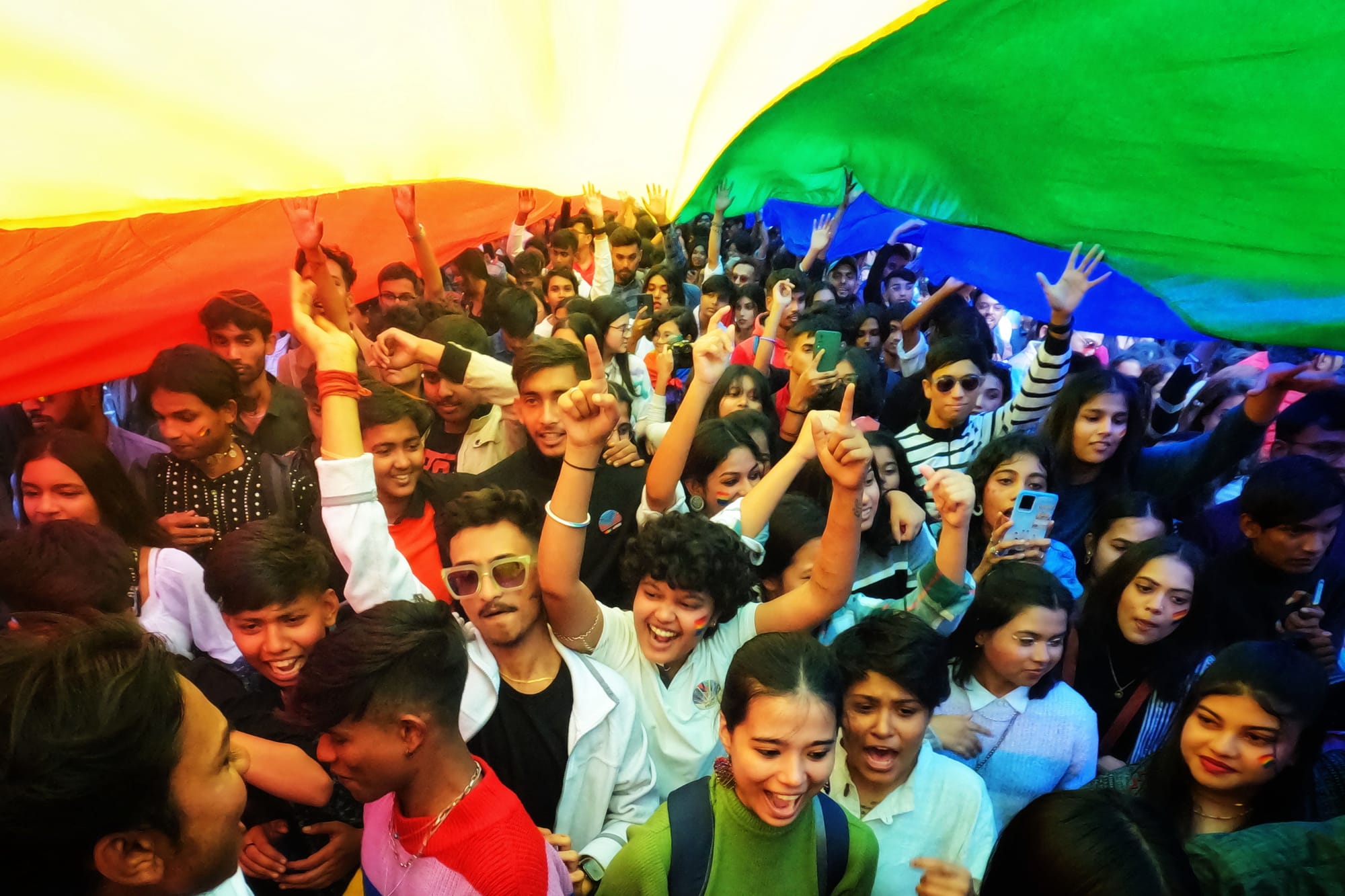
Photograph: Dibakar Roy. Kolkata Pride parade 2023
I was made to feel unsafe enough that my queer friends in India told me to leave because I was not safe there. By now, I was sleeping with the door double-locked and facing aggression from some of the men in the group. Whiskey-drunk men, pacing around at night outside my door, in a country that I had learned from past experiences would not protect me. I observed the women who had all been vocal and opinionated in the past. Intelligent, travelled and educated women, who were now mute. Only the men spoke, reminding me of the environment I’d been raised in.
This is the new India. A country where colonial, homophobic legislation has been removed, but the lived reality for marginalised groups is more dangerous than it’s been since partition. By marginalised groups I mean women, Dalits, Muslims and LGBTQIA+ people, collectively making up the vast majority of India’s 1.5 billion population.
In Goa, I met with artists and activist friends there who all shared with me the reality of what India has increasingly become
When I spoke to a lesbian friend in Mumbai who told me I’d be safer in Goa, I connected with a trans activist friend there and they immediately offered me a place to stay. In Goa, I met with artists and activist friends there who all shared with me the reality of what India has increasingly become.
From hot-takes to hard-hitting journalism, our long-reads put you at the centre of queer life and culture. The best LGBTQ writing, insight and opinion, curated for you.
Support our work by subscribing today and enjoy must-read stories by the voices you love.