

Dyllón Burnside on why now is the perfect time to “retell” his story
“For a lot of queer people, the idea of home is clouded with mixed emotions. For Black people, the idea of home is even more complicated.”
“For a lot of queer people, the idea of home is clouded with mixed emotions. For Black people, the idea of home is even more complicated.”
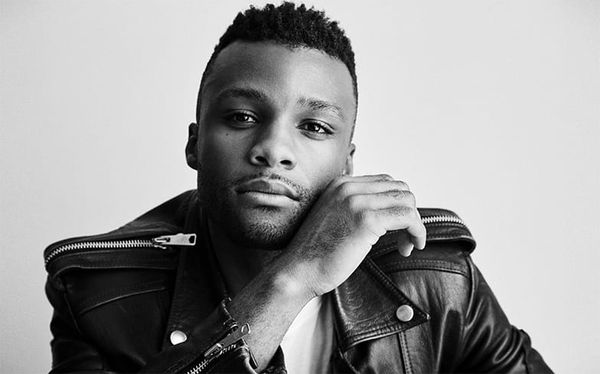
It has never been a more apt time for Dyllón Burnside to share his story.
The actor, who rose to fame with his role as Ricky Evangelista on Pose, is celebrating the 2020 Pride season with the PBS short-form series Prideland, which follows the star as he explores modern day life of the LGBTQ+ community in the American South.
Dyllón, who hails from the South, initially boarded the project as the host slash interviewer. As Prideland developed, he came to the realisation that he couldn’t return to his roots without retracing his own personal, yet complicated history.
“It was a great eye-opening opportunity for me to not only retell the narrative of what’s happening in the South for all the viewers, but it was an opportunity for me to retell the story of myself and what home is,” Dyllón tells GAY TIMES.
“People may actually have something to gain from hearing my story. If I can help someone process their pain or process the things that they’ve gone through, I can be a little bit more vulnerable. It’s the work that I’ve always signed up to do.”
To commemorate the release of Prideland’s one-hour special, which is available to stream 12 June on all PBS platforms, we spoke with Dyllón about the insightful new series, the importance of allies voicing support for the Black Lives Matter movement, and why it’s imperative for the LGBTQ+ community to remember the true spirit of Pride.
How long has this documentary been in the works for? Is this something you’ve always wanted to do?
I never really had this idea specifically, but everything that I’ve been doing up until this point has allowed me to do this kind of work. That has been a blessing. I’ve always been naturally curious, and as a kid I asked so many questions. I studied journalism and documentary courses in college. With my advocacy work and all of my experiences, it just naturally put me in position to be able to execute the work that this piece asked me to do.
You were raised in the South and you return to your roots for the series – was this hard for you to do on a personal level?
I’m a bit of a momma’s boy, so I visit my mom as often as I can. Coming back for Prideland was a bit different. I was not just coming back to the comfort of my mother’s home, I was coming and visiting places that I’d never been and talking about things that I don’t always talk about when I’m in the South. It was very uncomfortable. I also visited my home town in Pensacola, Florida, and it was really beautiful to go back after all these years. It also brought up some of my history and I had to revisit some things from my past. Overall, it was a great eye-opening opportunity for me to not only retell the narrative of what’s happening in the South for all the viewers, but it was an opportunity for me to retell the story of myself and what home is. For a lot of queer people, the idea of home is clouded with mixed emotions. For Black people, the idea of home is even more complicated. As the world watches the United States struggle with the issue of racism, feeling like you are “at home” as a Black person in this country is not always something that we feel. Add being queer to that, you also feel like an orphan and without a home to go to. The process of working on Prideland has really helped me work through some of the things that I have faced on my journey to sort of reconcile what home can be for me.
Did you have any hesitations going into this documentary? Like you said, it’s not only exploring America’s attitudes towards the LGBTQ+ community, but it’s exploring your story.
Absolutely. One of the great things about being an actor is that you can hide behind other people’s stories. You sort of get to have an emotional relief from the pain you experience in your life through someone else’s story, instead of telling your own. I definitely had hesitation about it and I almost didn’t do it, but we had a lot of conversations. Initially when we started talking about Prideland, it was just going to be about other people’s stories and I was going to be the interviewer. As I was talking to the producers, having meetings about who we were going to interview, I started telling them about what I had gone through. They expressed how similar the journeys were, and Jon [Reynaga] said to me, ‘How do you feel about telling your story throughout this?’ I thought, ‘Whoa whoa whoa. This is not what I signed up for!’ But I thought it through, prayed on it and decided that people may actually have something to gain from hearing my story. If I can help someone process their pain or process the things that they’ve gone through, I can be a little bit more vulnerable. It’s the work that I’ve always signed up to do.

£12.99 Monthly
£57.99 Annually
Cancel anytime
No results found. Try a different search.