Jordan Seamon reveals how We Are Who We Are reflects new LGBTQ+ generation
Like her character, the rising star went on a journey of self-discovery.
Like her character, the rising star went on a journey of self-discovery.
SPECIAL THANKS TO IMOGEN REID AT THE BBC
“If you don’t have it all figured out yet, that’s okay,” reassures Jordan Seamón. We’re talking with the rising star about HBO’s We Are Who We Are, the debut television project from Call Me By Your Name director Luca Guadagnino. A coming-of-age drama, the eight-episode series follows the lives of two teeangers on an army base in Italy. With supporting performances from Chlöe Sevigny, Alice Braga, Spence Moore II and Kid Cudi, the series has received universal critical acclaim for its exploration of gender, race and identity.
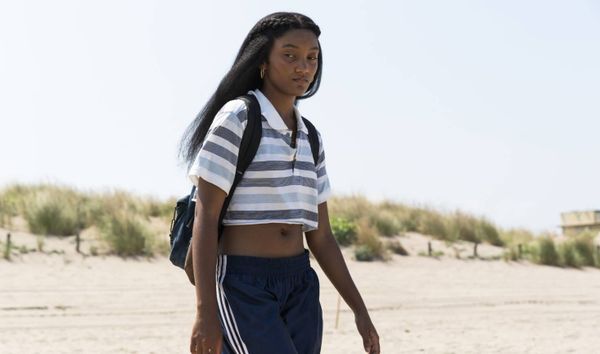
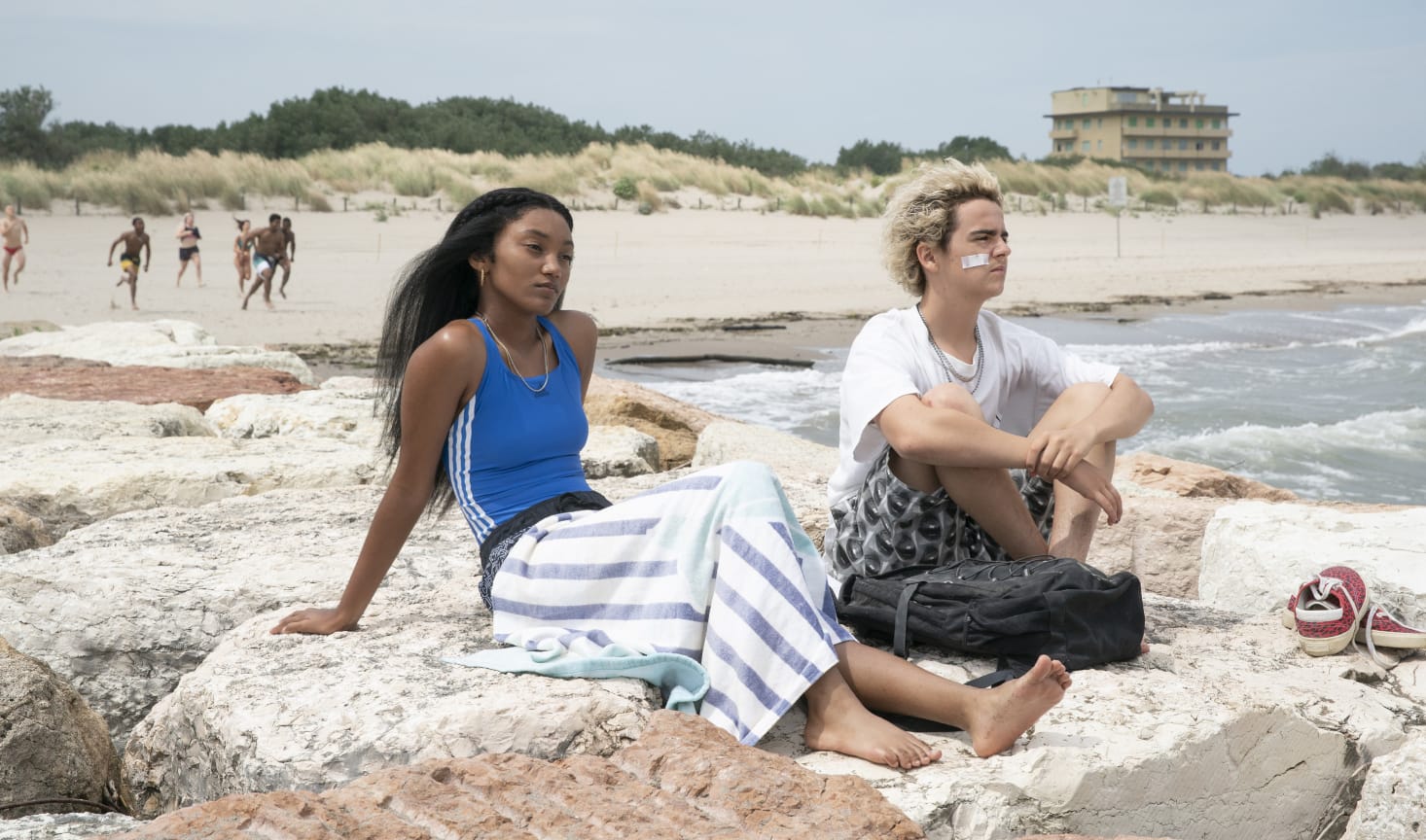
Seamón – in her first major role – portrays Caitlin “Harper” Poythress, one of the two aforementioned teens who bonds with series lead, Fraser (played by Jack Dylan Grazer), and embarks on a journey of self-discovery. Like her character, Seamón found herself during the six-month shoot. “Before I shot the show, I just identified as a bisexual woman,” she opens up to GAY TIMES.
After being referred to as Caitlin on set and with ‘they’ pronouns, Seamón came to the realisation that she was gender-fluid. “It didn’t feel weird or uncomfortable,” she adds. “It’s definitely helped my journey, which is why I always express that I’m super duper thankful for being able to play a character that made my journey a tad bit easier.”
Ahead of We Are Who We Are’s debut on BBC iPlayer (it’s available to stream now!), we spoke with the actress and singer over Zoom to discuss her beloved role in the fan-favourite drama, how the series reflects the up-and-coming LGBTQ+ generation, and where she wants to see Caitlin in a second season.
What drew you to the role of Caitlin?
It’s not like how some people have super cool stories on what drew them to the role. My mom was going through a casting website that she scrolled through, read the role and showed me the initial character blurb. And I just really liked it, I could really relate to the character in a sense. Caitlin was described as this super tomboy that did a lot of crazy things and just had a lot of fun. I felt very similar to that at the time. Not now, obviously, but at the time, I could really relate.
It really was the first time that I was referred to with they/them pronouns, and it felt good for me. It didn't feel weird or uncomfortable.
How did your own personal experiences inform your portrayal?
It informed some of it, but not all. I’m an adventurous person, so I like to think it was really easy. A lot of the things that Caitlin does, like the gun shooting, the boxing and the boating, it didn’t really take much for me to do. Even learning the Italian, it wasn’t hard for me to do because I’ve done similar things. When I was doing all the cool action stuff that Caitlin does, it was really easy for me to do because I was such an adventurous person and kind of still am. Other things, not that much. At that point in my life, Caitlin and I differed a lot. But slowly, we’ve become more and more similar to each other. But at that point in my life, the only thing that I really was able to bring to the role was just my adventurous side, which really helped whenever Luca asked me to do something crazy.
Caitlin struggles with their gender identity throughout the series – what kind of research did you do to step into that character?
At the time, I wasn’t questioning my gender identity. So, what I did to become more, I guess the word would be ‘aware’ or more ‘conscious’, was I asked friends that experienced the same thing. Now I’m gender-fluid, but at the time, I didn’t believe myself to be so I just asked friends. I was like, ‘Hey, what is this like? How is the experience? What were your thoughts and feelings?’ Just to not get a textbook idea of what it’s like, because everybody’s experience is different. I felt like I was able to bring a little bit more authenticity to the performance with speaking to people who have either questioned their gender identity or had transitioned, just to get a genuine idea of what it actually is, instead of what a textbook is telling you.
Was your time on the show a factor in discovering your gender identity?
Before I shot the show, I just identified as a bisexual woman. After playing the character, Caitlin, I was referred to as Caitlin a lot, just by accident. I just adopted it. I was like, ‘No, it’s fine. For six months, call me Caitlin.’ But you know, when people talked about Caitlin, they would use all pronouns or she/they pronouns. It really was the first time that I was referred to with they/them pronouns, and it felt good for me. It didn’t feel weird or uncomfortable. So, I didn’t really think too much about it, and I didn’t really talk to too many people about it, just because I was still very unsure. I wanted to continue to play the role without trying to put my journey on top of Caitlin’s journey. I just wanted to finish that and then go throughout my journey, but it definitely helped. I now identify as gender-fluid so I use she/they pronouns. Some people refer to me with he/him pronouns, that doesn’t make me feel uncomfortable. They’re not my preferred ones, but if people use them I’m not offended. It’s definitely helped my journey, which is why I always express that I’m super duper thankful for being able to play a character that made my journey a tad bit easier.
How would you say Caitlin and Fraser reflect the up-and-coming LGBTQ+ generation?
That’s a really good question, nobody’s asked me that yet. I think Caitlin and Fraser show that our generation have the ability to be fluid. Sometimes, we have a tendency to be so focused on labels, which we’re drifting away from, which is really good. Labels can sometimes be really helpful, and if a label is good for you, then great, but sometimes a label can not be great. It can really dampen someone and put them in one spot when they’re not. I think Caitlin, and Fraser, especially with how the series goes, and from start to end, it shows that it’s okay to not know exactly where you are. It’s okay to be everything at once, to be very fluid and open. You don’t have to use a label. I mean, you are who you are. It’s what the show’s called, We Are Who We Are, because you’re just being yourself. If you don’t have it all figured out yet, that’s okay.
£12.99 Monthly
£57.99 Annually
Cancel anytime
No results found. Try a different search.